Serving Benicia, CA and surrounding areas. (707) 750-8535
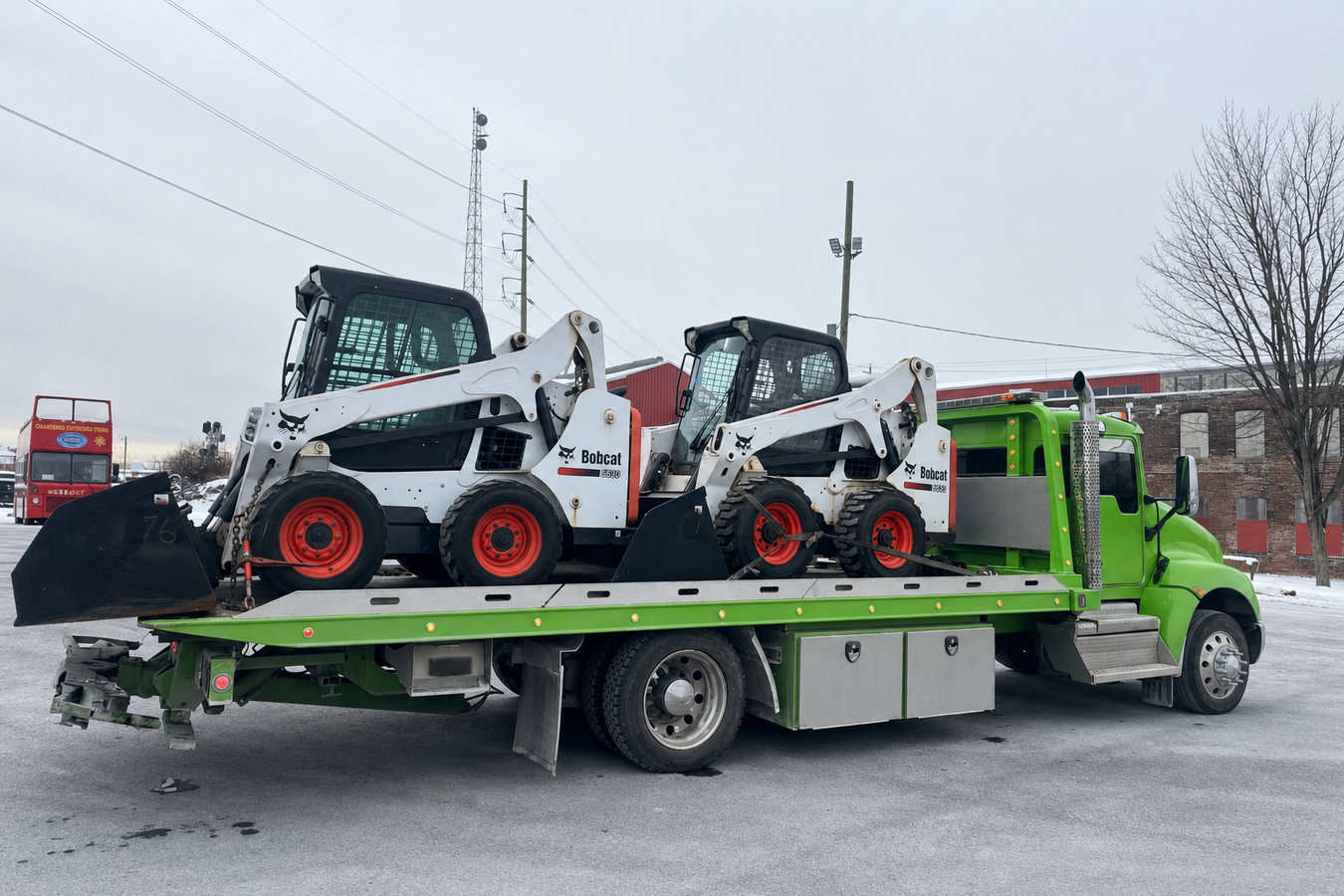
Moving a bulldozer, excavator, or industrial machine requires more than a tow truck. We arrive with rated rigging, the correct trailer deck, and the permit coordination your load requires on the I-680 corridor.
Heavy equipment towing means moving large, heavy, or oversized pieces of construction, agricultural, or industrial equipment that a standard tow truck simply cannot handle. This includes bulldozers, excavators, cranes, forklifts, generators, compressors, and other machines that are too large, too heavy, or too awkward in shape for a conventional flatbed. The crew uses specialized trailers, lowboy decks, and rigging equipment matched to the specific machine being moved.
Moving a 40-ton excavator is nothing like towing a pickup truck. The wrong trailer or an improperly secured load can damage undercarriages, hydraulic lines, or structural components - and can create a serious road hazard. A qualified heavy-equipment hauler arrives with the right deck height, the right tie-down points, and the experience to load your machine without causing damage. For situations where a machine has tipped or become stuck and needs to be righted before transport, this becomes a recovery job that requires winches and rigging beyond what a standard tow can provide. Site supervisors and fleet managers who also run commercial vehicles in the corridor may find our roadside assistance service useful for smaller on-the-spot calls.
Every hour a piece of equipment sits idle on a job site or roadside is money out of your pocket. A heavy-equipment towing company with the right fleet and experienced operators can get your machine to a repair shop, a new job site, or a storage yard as quickly as the route and permits allow - minimizing the gap between breakdown and back-to-work.
When a piece of construction or industrial equipment stops running and cannot be repaired on-site, it needs to get to a shop - and that means a heavy-equipment hauler, not a standard tow truck. The longer it sits, the more it disrupts your schedule and your crew.
When a project wraps up in Benicia or Vallejo and the next one starts across the bridge in Contra Costa County, you need a permitted, properly equipped hauler who knows the I-680 corridor and the bridge crossing requirements. Trying to move heavy equipment without the right trailer and permits is a compliance risk and a safety hazard.
On a graded site, near a waterfront facility, or on a soft-ground area along the Carquinez Strait, equipment can tip or sink in ways that make it impossible to drive or roll onto a trailer. This is a recovery job, and it requires a crew with the rigging and winching capability to right the machine safely before transport.
Moving a large compressor, generator, or processing unit within or between industrial facilities on the Benicia waterfront requires a hauler who understands facility access rules, weight-restricted internal roads, and the coordination required in an active industrial setting. A general towing company without this experience is the wrong call.
Fleet managers and site supervisors who work regularly in the Benicia and Solano County area know that having a heavy-equipment hauler's number already in their phone - and a relationship already established - means far less downtime when an incident happens. Setting up an account before you need it is the smartest move you can make.
Our service covers construction equipment, agricultural machinery, industrial units, and any oversized or overweight load that exceeds standard commercial vehicle limits. We carry equipment sized for what you need: lowboy trailers for machines with low ground clearance, flatbed decks for units that can be driven or winched on, and rigging rated for the weight of your load. Before any machine is loaded, the crew walks the site, identifies the correct lift and tie-down points, and confirms the load plan. You should never see a machine strapped to a trailer without the operator confirming every attachment point first.
For most heavy equipment moves on public roads in California, oversize or overweight load permits are required before the truck rolls. We handle this process - including coordination with Caltrans and CHP where the route requires it - and give you a clear timeline that accounts for permit lead time so you can plan your crew and schedule around a realistic delivery window. Businesses that regularly move equipment through the corridor can also ask about our heavy duty towing coverage for loads that fall within commercial vehicle weight classes.
Bulldozers, excavators, graders, and other job-site machinery moved between sites or to repair facilities with the rated trailer and permit handling the route requires.
Generators, compressors, and processing units moved within or between industrial and refinery facilities along the Benicia waterfront corridor.
When a machine has slid off a grade or sunk into soft ground, winching and rigging get it back on its tracks or wheels before transport begins.
Loads that exceed standard California weight and dimension limits moved on permitted routes with Caltrans coordination and pilot-car escort where required.
Benicia sits at a critical junction where I-680 crosses the Carquinez Strait via the Benicia-Martinez Bridge, one of the busiest freight and commercial corridors in the Bay Area. Heavy equipment being transported to or from job sites in Solano, Contra Costa, or Napa counties frequently travels this route, and a breakdown or incident on or near the bridge creates significant logistical complexity - including coordination with Caltrans and the California Highway Patrol before a heavy haul can proceed. Businesses moving equipment to and from Vallejo, CA job sites and throughout the North Bay rely on this corridor regularly.
Benicia is also home to a major petroleum refinery and a substantial industrial waterfront along the Carquinez Strait. This means there is consistent local demand for moving heavy industrial machinery - compressors, generators, processing equipment - within and between industrial facilities. Providers familiar with this corridor understand the access restrictions, weight limits on certain facility roads, and the coordination required to move equipment safely in an active industrial environment. Port and marine access points along the waterfront and nearby port facilities sometimes handle cargo that arrives or departs by barge, requiring a hauler who understands the access routes and permit requirements for oversized loads through the area.
The broader Solano County and northeastern Bay Area region has seen ongoing infrastructure and development projects - highway improvements, commercial construction, and utility work - that regularly require moving excavators, graders, and other heavy machines between sites. Response times from Benicia to job sites in Fairfield, CA or across the bridge into Contra Costa County are a practical consideration, and a provider based in Benicia knows the most efficient permitted routes before the truck rolls.
Dispatch asks for the type and approximate weight of the machine, its current location (including access conditions - paved lot, muddy site, waterfront facility), and your destination. They also ask whether the machine is upright and drivable onto a trailer, or whether it needs to be winched or righted first. The more detail you provide, the faster the right equipment and crew can be assigned.
For most heavy equipment moves on public roads in California, the hauler will obtain an oversize or overweight load permit before the truck rolls. Your provider handles this process, but it adds lead time depending on the route, the size of the load, and whether the move involves restricted corridors like the Benicia-Martinez Bridge approach. Your dispatcher will give you a realistic timeline.
When the crew arrives, they walk the site and assess the machine - its condition, the ground conditions, and the best approach for loading. They identify the correct lift and tie-down points, position the trailer, and rig the load using rated chains, binders, and straps appropriate for the weight. If the machine needs to be winched or righted first, that work happens before loading begins.
The machine is driven, winched, or lifted onto the trailer deck. The crew secures it fully - checking every attachment point - before anyone moves. A professional crew will not leave the site until the load is confirmed stable and all safety requirements are met.
The hauler transports your equipment along the permitted route to the destination. On routes through the Benicia area, this may involve coordination with Caltrans or the CHP for oversized loads, travel-time restrictions, or pilot-car escorts. Your provider manages this; your job is simply to confirm the delivery address and any access requirements at the destination.
At the destination, the crew unloads the machine, confirms it is positioned where you need it, and completes the paperwork. Payment is typically collected at delivery or invoiced to an established account. If anything about the machine's condition changed during transport, a reputable provider will note it and discuss it with you before they leave.
Tell us your machine, your location, and your destination - we will give you a clear price and timeline before anything moves.
(707) 750-8535Your excavator, bulldozer, or industrial unit arrives at its destination on a trailer rated for its weight, secured by a crew that knows exactly where the tie-down points are. You are not handing a six-figure piece of equipment to a company that is improvising - you are working with operators who arrive with the right deck, the right rigging, and the right experience.
When a machine goes down on a job site in Benicia, Vallejo, or across the bridge in Contra Costa County, a provider who knows this corridor moves faster, plans smarter, and gets your equipment to the shop or the next site without the delays that come from working with someone unfamiliar with the area.
The oversize-load permit process, the bridge approach restrictions, and any Caltrans coordination are handled by your hauler - not handed back to you as a problem to solve. You get a clear timeline upfront, including any lead time for permits, so you can plan your crew and schedule around a realistic delivery window.
If an excavator slides off a grade near the Carquinez waterfront or sinks into soft ground on a Solano County site, a provider with rigging, winching, and recovery capability handles the whole job - righting the machine, loading it, and transporting it - rather than sending you searching for a separate recovery crew while the clock runs.
Commercial haulers moving heavy equipment at certain weight thresholds are subject to federal motor carrier safety requirements administered by the FMCSA. Meeting these standards means equipment and operators are held to a higher bar - which matters when high-value machinery is on the line.
Membership in the Towing and Recovery Association of America (TRAA) connects a company to national professional standards, ongoing education, and industry best practices - a meaningful baseline of credibility for any operator handling high-value equipment.
Fleet managers and site supervisors working regularly in the Benicia industrial corridor or on Bay Area infrastructure projects do not have to scramble for a number when something breaks down. Establishing an account and a working relationship now means faster response, smoother dispatch, and a crew that already knows your equipment and your sites when the call comes in.
On-the-spot help for jump-starts, flat tires, lockouts, and fuel delivery anywhere in the Benicia area - fast response on the bridge corridor and I-780.
Learn MoreHeavy duty towing for commercial vehicles, semis, and large rigs that exceed standard tow truck capacity - the right equipment from the first call.
Learn MoreCall (707) 750-8535 to discuss your machine, your route, and your timeline - we will give you a clear quote and handle the permit coordination before anything rolls.