Serving Benicia, CA and surrounding areas. (707) 750-8535
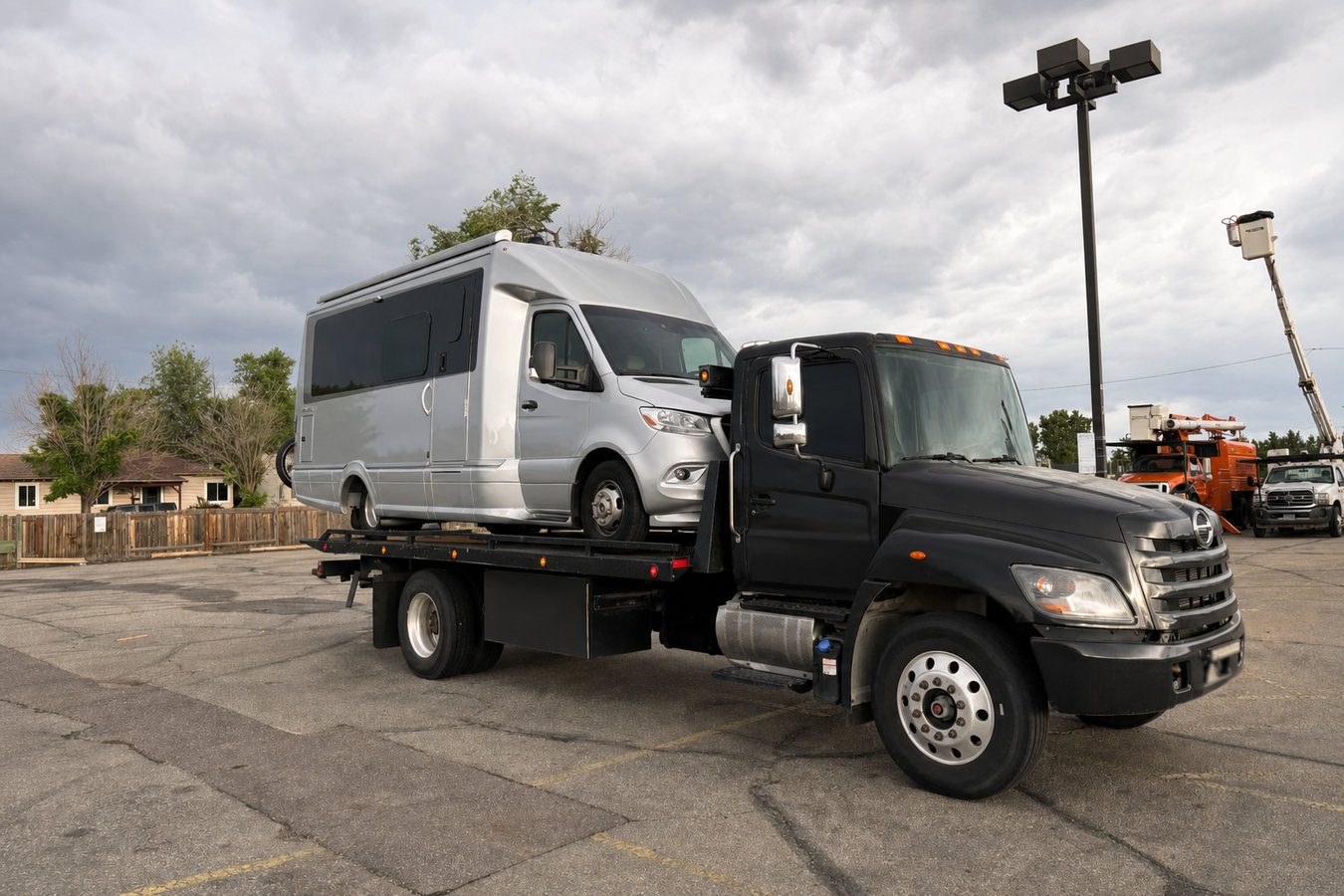
Box trucks, RVs, work vans, and large pickups need more than a standard tow truck. We dispatch the right medium duty equipment to I-780, the industrial corridor, and anywhere in the Benicia area so your vehicle moves safely the first time.
Medium duty towing in Benicia covers vehicles too large for a standard passenger-car tow truck but not requiring full heavy-duty semi equipment - box trucks, delivery vans, large pickups with heavy payloads, RVs, and shuttle buses, with most on-scene work completed in 20 to 45 minutes under normal conditions.
The core issue is equipment matching. A light-duty truck is not rated for your box van, and sending the wrong rig wastes time and risks damage to your vehicle. When you call us, the dispatcher asks about your vehicle type before anything rolls - so the right truck arrives the first time. If your situation also involves commercial fleet vehicles on regular routes, our truck towing service covers the larger end of that range as well.
Benicia's industrial waterfront, the I-780 corridor, and the Benicia-Martinez Bridge approach are all areas where medium duty breakdowns happen under pressure - limited shoulder space, fast-moving traffic, and real downtime for any business that depends on that vehicle being back on the road. We know this corridor and respond accordingly.
If a standard tow truck has shown up and cannot safely load your vehicle - or if the dispatcher told you a heavier unit is required - that is the sign. Box trucks, full-size cargo vans, large pickups with payloads, and RVs all fall outside the light-duty range. Forcing an underpowered truck to handle the job risks damage to your vehicle and the tow equipment.
Every hour a delivery van or service truck sits on the side of the road is a missed job. Medium duty towing gets the right equipment to your vehicle without the delay of discovering mid-call that the first truck sent cannot handle the weight. Describing your vehicle accurately when you call is the single fastest way to get back to work.
A box truck in a ditch, a work van wedged in a tight industrial lot, or a large pickup that has slid off a shoulder on a rural connector road all need more than a standard tow. Medium duty recovery requires winching capacity and operator experience matched to the vehicle's size - not just a hook-up and go.
The worst time to search for a towing company is when a vehicle is already down. Fleet managers and owner-operators in the Benicia area benefit from identifying a medium duty provider before the next breakdown, confirming they cover your routes and have the right equipment, and saving the number in advance. One call replaces a scramble.
We handle medium duty towing using flatbed carriers and wreckers sized for the vehicle's weight class - not the same light-duty equipment used for passenger cars. For vehicles where a flatbed is impractical due to size or road position, a wheel-lift or underlift method may be used, with the operator choosing the approach that best protects the drivetrain and bodywork. Every job starts with an on-scene assessment: the operator walks around the vehicle to check its position, any visible damage, whether it is leaking fluids, and what the safest loading approach is before anything is attached. That few extra minutes at the start prevents new damage during the tow. For the heavier end of the commercial range - semi-tractors and large construction equipment - our heavy duty towing service uses equipment specifically rated for those loads.
You direct where the vehicle goes - your shop, a fleet yard, a dealership, or another location - and we confirm the destination before loading. For longer hauls across the Bay Area or into Solano County, we are equipped for the full trip. Proper securement means the right number and type of straps or chains for your vehicle's weight, checked before the truck moves. If you want to watch and ask questions about how the vehicle is being secured before we pull away, that is completely normal and we welcome it.
Flatbed and wrecker response for disabled box trucks, cargo vans, and delivery vehicles on Benicia roads and industrial corridors, matched to the vehicle's weight class.
RVs, shuttle buses, and oversized personal vehicles that fall outside the light-duty range, towed safely to your destination without drivetrain stress.
Vehicles stuck off-road, in a ditch, or in an awkward position that cannot be driven or rolled onto a flatbed - recovered using appropriate winching capacity for the vehicle's weight.
Fast dispatch to Benicia's industrial corridor and waterfront areas for fleet operators and businesses whose work vehicles cannot afford long downtime.
Benicia handles a volume of commercial and industrial traffic that most small cities its size do not. The Valero Benicia Refinery, the waterfront industrial parks, and the distribution operations along the city's southern edge all generate regular work truck traffic. When a service vehicle or delivery van goes down in one of those corridors, the recovery situation is not a suburban driveway pickup - it may involve gate access, industrial-lot constraints, and a driver who is already behind schedule. Drivers passing through from Vallejo, CA via I-780 and commuters from across Solano County are also regular contributors to the breakdown calls on this stretch.
The Benicia-Martinez Bridge carries heavy commercial traffic on I-680 daily. A disabled medium duty vehicle on or near that bridge is a high-stakes situation - limited shoulder, fast traffic, and CHP on scene quickly. A provider who knows this corridor knows how to coordinate with CHP, understands the access constraints near the bridge approaches, and can get into position without adding to the problem. For operators running routes to Fairfield, CA and the surrounding Solano County area, having a medium duty provider already identified before a breakdown is the difference between a one-call resolution and a multi-hour search. The Federal Motor Carrier Safety Administration sets safety standards for commercial vehicle towing operations, and we comply with applicable federal regulations for the vehicle types we handle.
Tell the dispatcher your location, the type and size of your vehicle, and what happened. Specifics about weight class and road position determine which truck rolls. You get an estimated arrival time before you hang up. We respond to messages within one business day, but a phone call is fastest for live dispatching.
A medium duty flatbed or wrecker is routed to you based on your vehicle's needs. On I-780 and near the bridge, the dispatcher accounts for current traffic and gives you a realistic window - not a best-case estimate. Stay with your vehicle if it is safe, hazard lights on.
The operator walks around your vehicle before touching it. Position, visible damage, fluid leaks, and loading approach are all checked first. This step takes a few minutes and is not skipped - it is what prevents new damage during the tow.
The operator chooses flatbed loading, wheel-lift, or winch recovery based on your vehicle's condition. Multiple tie-down points are checked before the truck moves. You confirm the destination, and at drop-off you receive an itemized receipt showing the base rate, mileage, and any additional charges.
Describe your vehicle and location and we will dispatch the right equipment immediately - no wrong truck, no second call.
(707) 750-8535When you describe your vehicle - make, type, approximate weight - we match it to the right truck before anyone rolls. No light-duty unit showing up to a box van, no second dispatch, no extra wait. Getting equipment right the first time is the single biggest factor in keeping your downtime short.
Breakdowns on or near the Benicia-Martinez Bridge are a regular part of what we handle. We know the shoulder constraints, the CHP coordination process for this corridor, and how to position safely for a recovery without adding to the traffic problem. That experience is not something you can replicate by just sending any available truck.
A medium duty vehicle is a significant asset. Damage during a tow is avoidable with a proper pre-load assessment - vehicle position, visible damage, fluid leaks, and the right tie-down plan. We take a few extra minutes at the start of every job because arriving at the destination with a vehicle in the same condition it left the scene is the standard, not the exception.
California regulates towing rates in many circumstances, and we operate within those rules. You get a clear quote before the truck is dispatched for authorized tows, and an itemized receipt at drop-off. The Towing and Recovery Association of America sets professional standards for our industry - we are a member and operate accordingly.
Fleet managers and owner-operators in the Benicia area who save our number before a breakdown get a single-call resolution when it happens. A provider already familiar with your routes and vehicle types responds faster and with fewer questions than one you found in an emergency search. The Towing and Recovery Association of America provides the certification and professional standards framework we follow for medium duty towing operations.
Semi-tractors, large construction equipment, and vehicles beyond the medium duty range requiring specialized heavy recovery equipment.
Learn MoreCommercial truck towing for single-axle and tandem-axle trucks operating on Benicia routes and the I-680 corridor.
Learn MoreCall us, describe your vehicle, and we dispatch the right equipment immediately - so your driver is not waiting on the wrong truck while downtime adds up.